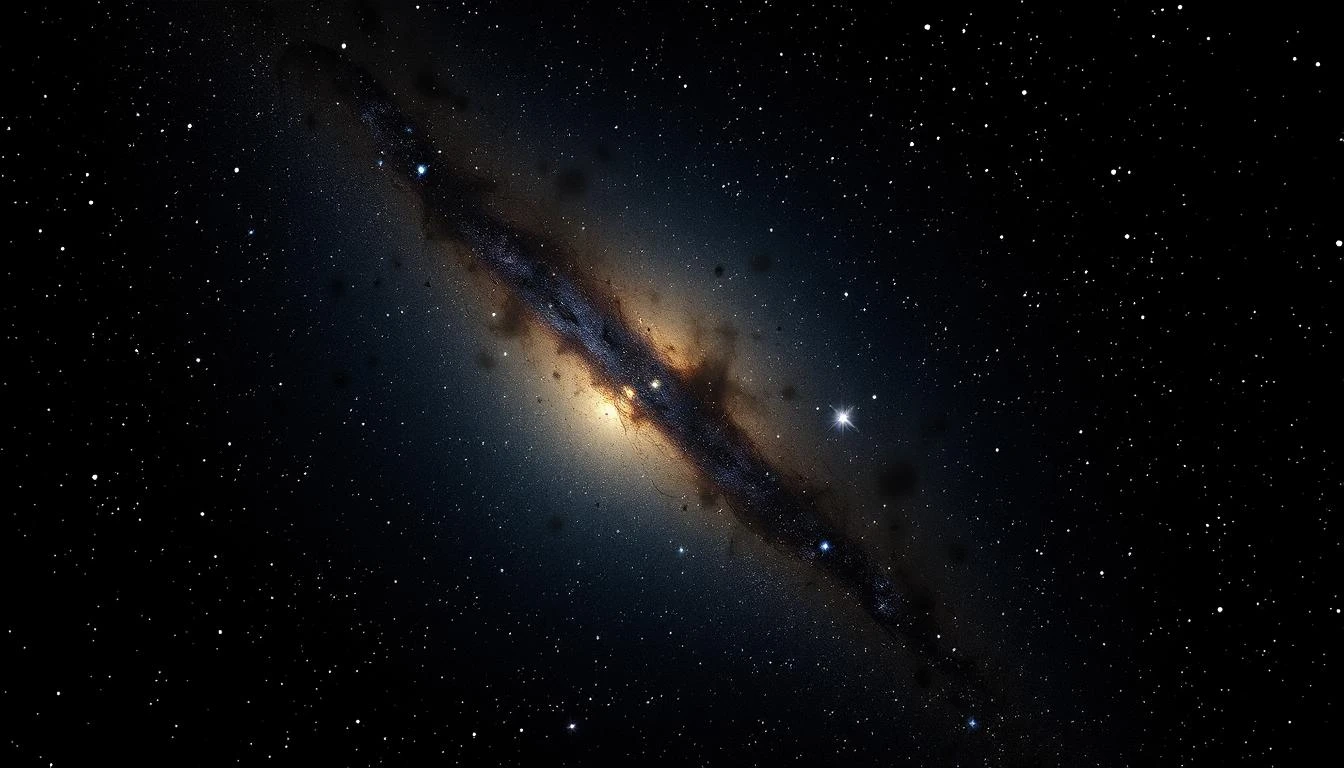
New Cosmic Discoveries Changing Astronomy
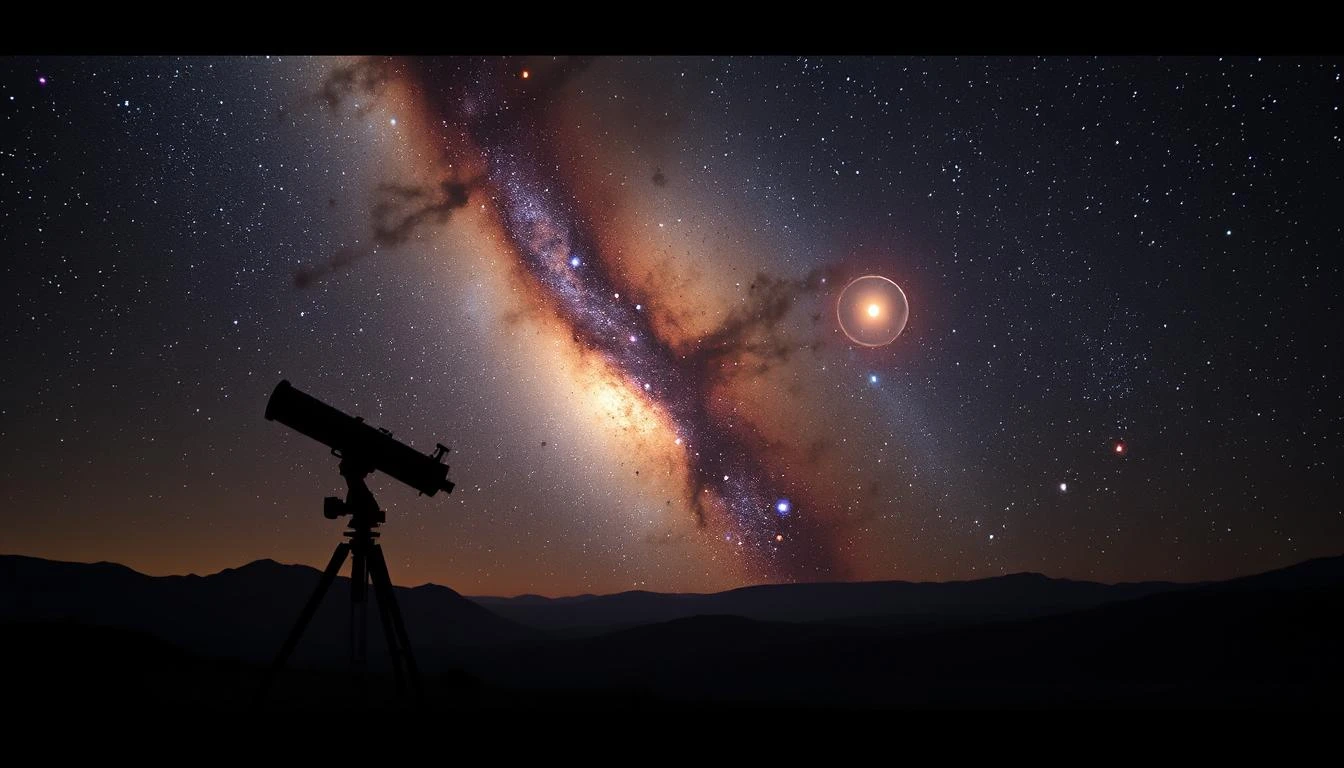
The universe is not playing nice with human expectations. Every time astronomers think they have pinned down how things work, space responds with another curveball that bends logic and stretches theory. From distant galaxies acting too mature for their age to energy signals that refuse to fit known physics, modern astronomy is entering a phase where certainty feels more like a temporary illusion than a conclusion.
In the middle of this rapidly shifting scientific landscape, new cosmic astronomy discoveries breakthrough signals are reshaping how researchers interpret deep space behavior. These signals are not just faint echoes from the cosmos, but structured anomalies that suggest the universe is far more dynamic, layered, and unpredictable than traditional models ever allowed.
Recent Breakthroughs in Cosmic Science
Modern astronomy is experiencing an explosion of unexpected findings that are forcing scientists to rethink the very foundation of cosmic evolution. The most intriguing part of recent research is not just what is being discovered, but how quickly old models are being questioned. Data from deep space is no longer passive information, it behaves like an active disruptor in theoretical physics discussions.
cosmic astronomy recent discoveries data findings are now central to discussions among researchers analyzing galaxy formation timelines, dark matter distribution, and energy fluctuations across intergalactic space. These discoveries are not isolated events. They form a pattern that suggests the universe is still actively evolving in ways we are only beginning to recognize.
Discoveries from space telescopes
Space telescopes are revealing galaxies that appear far too developed for their supposed age. This creates tension in existing models of early universe formation. Instruments like deep-field infrared scanners are capturing light that traveled billions of years, yet the structures behind that light seem surprisingly complex. Astronomer Dr. Samuel Hargrove once noted, “We are not just seeing distant galaxies, we are seeing early chapters of physics we do not yet understand.” His observation highlights how telescope data is pushing science into uncomfortable but exciting territory.
New galaxies and star formations
Star formation is happening in regions where it was previously considered unlikely. Dense clusters are emerging at speeds that challenge traditional gravitational collapse theories. This suggests that the universe may have multiple pathways for star creation, not just the standard models currently taught.
Unexpected cosmic energy patterns
Energy fluctuations detected across vast cosmic distances are forming irregular patterns that do not match known astrophysical sources. Some researchers suspect unknown interactions involving dark matter or exotic cosmic fields. Others believe these signals could indicate missing variables in current physical laws.
How Astronomy Is Evolving Today
Astronomy is no longer limited to observation. It has transformed into a hybrid discipline combining physics, computation, and artificial intelligence-driven analysis, and it’s changing how we decode the universe faster than ever.
Impact of advanced imaging systems
Advanced imaging technologies are revealing structures in space with extreme precision. These systems allow scientists to map invisible matter and detect gravitational distortions that were previously undetectable. This has opened new ways to study cosmic architecture beyond visible light.
Role of data-driven space research
Large-scale astronomical datasets are now processed using machine learning systems capable of identifying patterns beyond human recognition. This approach is accelerating discoveries and improving interpretation accuracy in complex cosmic environments.
Modern simulation technologies
Supercomputers are now used to simulate entire universe-scale scenarios, from galaxy formation to dark matter interaction networks. These simulations often confirm theories but just as frequently expose inconsistencies that require revision.
What These Discoveries Mean for Humanity
The implications of modern astronomical discoveries extend far beyond academic curiosity. They influence how humanity understands existence itself. It also quietly messes with how sure we feel about what reality even means.
Understanding universe expansion
Measurements of universe expansion are showing inconsistencies depending on observational methods. This expansion tension is one of the most debated topics in cosmology today, raising questions about whether current physics models are incomplete.
Possibility of extraterrestrial life
The detection of organic molecules in distant planetary atmospheres has strengthened scientific interest in life beyond Earth. Combined with discoveries of potentially habitable exoplanets, the probability of life elsewhere is becoming a serious research topic rather than speculation.
Redefining cosmic boundaries
The concept of a fixed observable universe is becoming less stable as telescopes continue to capture earlier cosmic light. Boundaries are shifting, suggesting that the universe may not have a simple or static edge.
Discover More About The Expanding Universe
The universe is revealing itself in layers, and each layer challenges what was previously considered stable knowledge. Every discovery seems to pull science further into a reality where rules are not fixed but adaptive. Astrophysicist Dr. Elena Marquez stated, “The universe is not expanding just in size, but in complexity of understanding.” This reflects how modern discoveries are not just adding information but reshaping the framework used to interpret it.